
Macrodiplophyllum flaccidum
| Common Name | Flaccid Earwort |
| Quick & Dirty ID | XXXXXX |
Image Gallery


Distinguishing Features
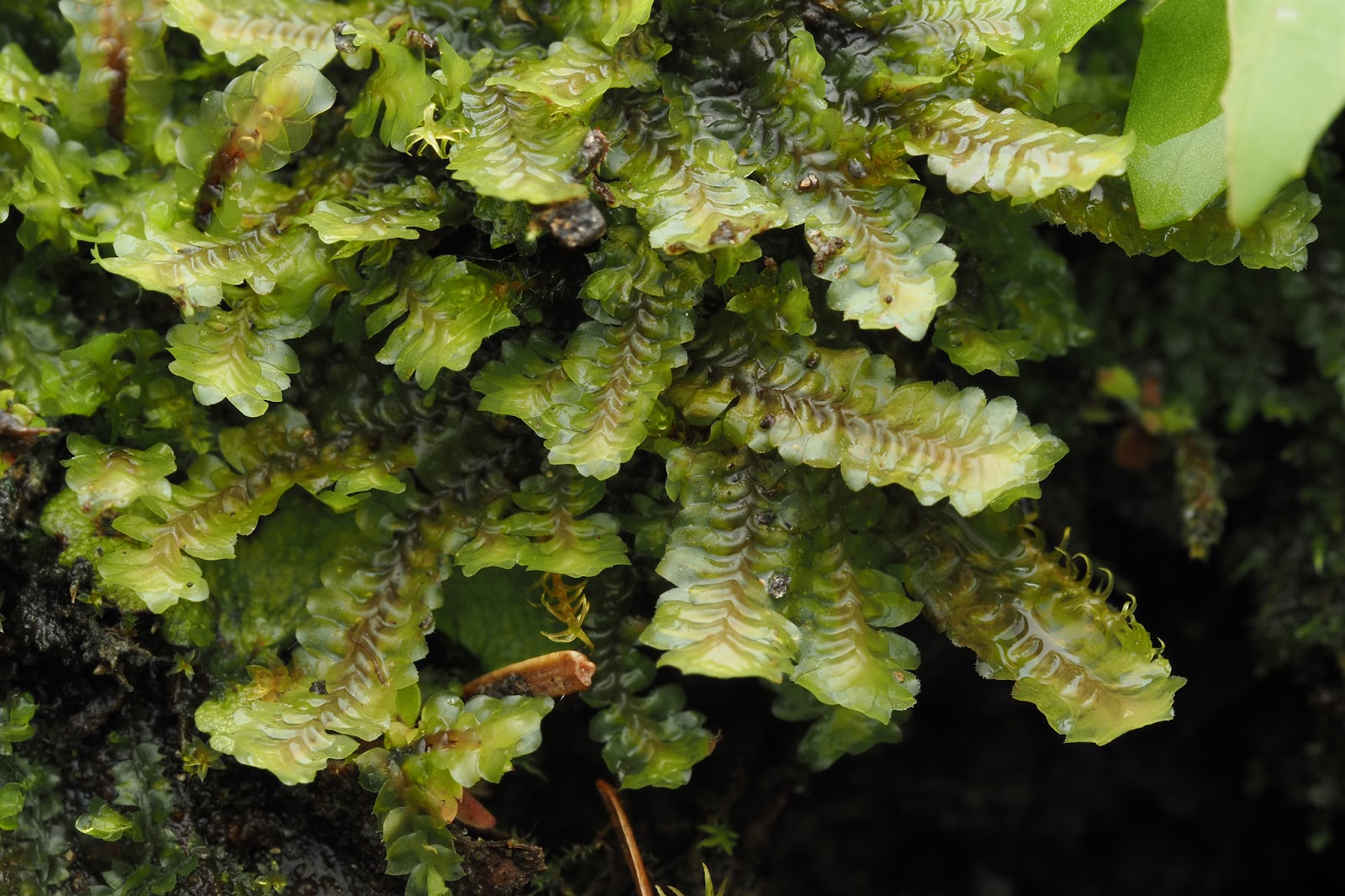
An infrequent species of uncommonly moist low-elevation microhabitats (waterfalls, deep canyons), M. flaccidum is marked by elongate, toothed lobes and a glossy palour. The outermost half of the lower lobes are characteristically held at nearly 90 degrees from the stem and are often parallel to the upper lobes. Teeth are well developed along the lobe apices and the plant, when dried, is strongly contorted.
Similar species
While similairly toothed to M. rubrum, M. flaccidum lacks its red pigmentation. M. imbricatum is a higher elevation species with smooth leaf lobes that have a rounded aspect. M. plicatum occurs in similar habitats, but in that species the lower lobes are held at 70 degrees to the stem, whereas in M. flaccidum they are held at 90 degrees to the stem.
Habitat
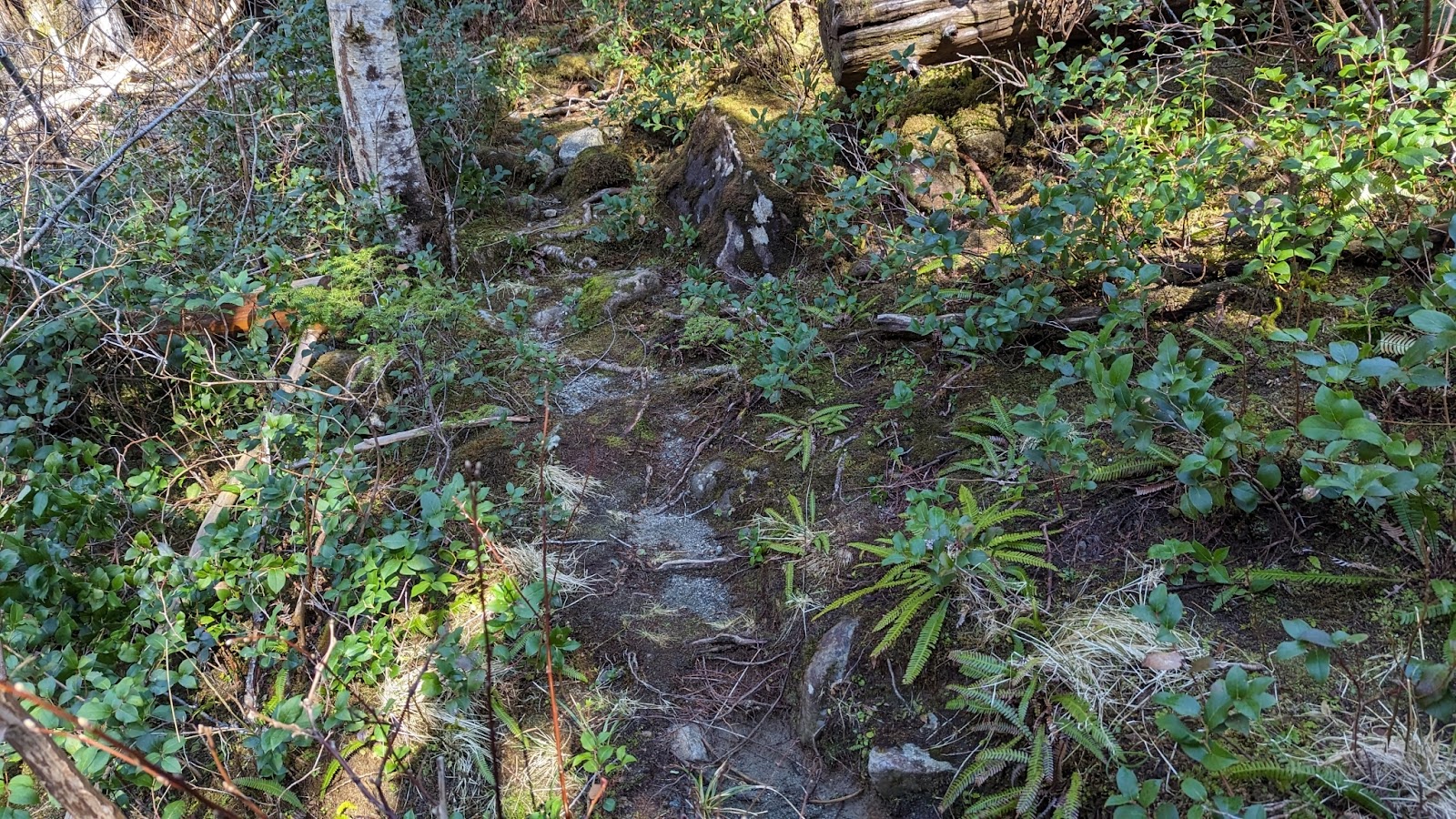
Moist to wet mineral soil, rock outcrops, boulders, cliffs, and cutbanks in the lowland zone; frequent in coastal BC.
Associated species
Distribution Map
Relevant Literature
- Godfrey, J.D. (1977). Hepaticae and Anthocerotae of southwestern British Columbia . [Doctoral dissertation, University of British Columbia]. UBC cIRcle.
- Hong, W. S. (2007). Scapania. In Flora of North America Editorial Committee (Eds.), Flora of North America North of Mexico (Vol. 3) . Oxford University Press.
- Wagner, D. H. (2013). Guide to the liverworts of Oregon: Scapania undulata . Oregon State University Herbarium.